Identify an aerospace fastener from its head and tail
Grouped by what each maker's document shows on the tail side. This page does not identify a part number: the drawing and the parts catalog do.
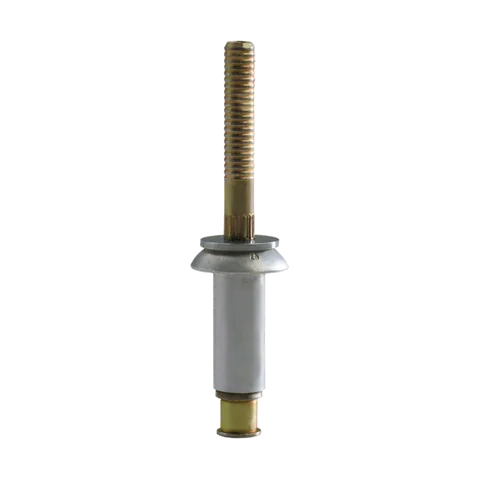
- Bulbed sleeve, stem locked in the head by a collarCherryMAXCherryLOCK (bulbed)
- Threaded collar, wrenching device sheared off, hex recess in the pin endHi-LokHi-Lite
- Collar swaged into locking grooves on the pinHuck lockbolt, pull type
- Sleeve expanded into a head against the back surface by turning a screwComposi-Lok II
- Bucktail upset into a shop headSolid rivet (MS20470)
The left column is a summary. Each maker's wording and its source are under the fastener's name below.
The aircraft's structural repair manual and the manufacturer's installation instructions govern. The illustrated parts catalog and the SRM name the part. A fastener that looks the same is not an approved substitute.
Reference only: the controlling drawing, its process spec and the manufacturer's installation instructions govern. How to use these answers
CherryMAX
Cherry Aerospace
Head side
Tail side
Head side
- “The Locking Collar must be flush or under-flush with the top surface of the rivet head.” Cherry CA-1015 p.15
- “Continued pulling by the installation tool causes the stem to fracture at the break notch, providing a flush, burr-free, inspectable installation.” Cherry CA-1011 p.3
Tail side
- “A bulb will form on the blind side of the structure.” Cherry CA-1015 p.6
What it is, and marks4 lines
- “Mechanical-lock rivets have a device on the puller or rivet head which locks the center stem into place when installed.” FAA AC 43.13-1B p.4-19b
- The stem and rivet materials and the grip range are marked on the head of the fastener and are visible after installation. Cherry CA-1015 p.13
- “The color of the driving anvil (removed during installation) indicates whether the fastener is nominal or oversize.” Cherry CA-1015 p.14
- Before installation: gold driving anvil is nominal, silver is oversize. Cherry CA-1015 p.14
CherryLOCK (bulbed)
Cherry Aerospace
Head side
Tail side
Head side
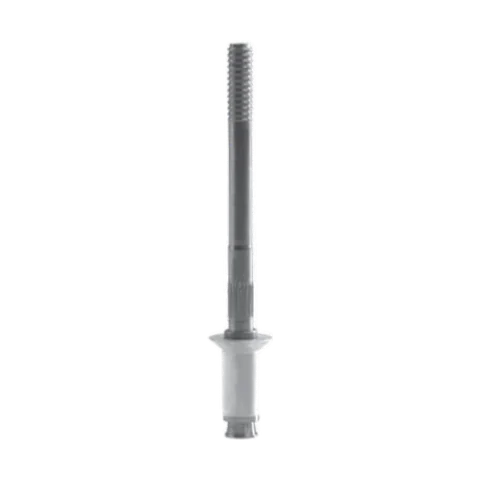
- “Pulling head has inserted locking collar and stem has fractured flush with rivet head.” Cherry CA-1005 p.3
- “The rough end of the retained stem in the center on the manufactured head must never be filed smooth, because it will weaken the strength of the lockring and the center stem could fall out.” FAA AC 43.13-1B p.4-22
Tail side
- “Stem is pulled into rivet sleeve and starts to form bulbed blind head.” Cherry CA-1005 p.3
What it is, and marks2 lines
- “A Bulbed Cherrylock consists of three parts; a rivet shell, a puller, and a lockring.” FAA AC 43.13-1B p.4-22
- Cherry marks the grip length on the rivet head, with the exceptions CA-1005 lists. Cherry CA-1005 p.23
Hi-Lok
Hi-Shear
Head side
Tail side
Head side
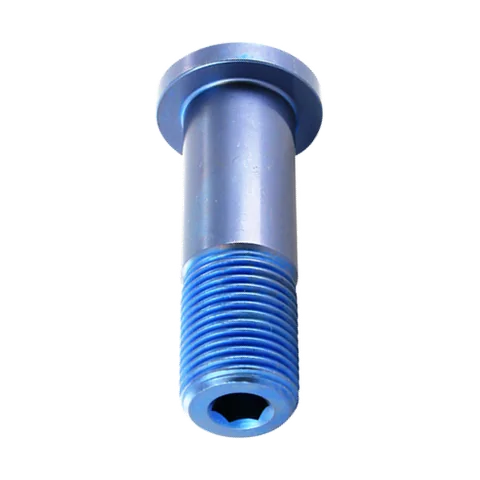
- HL10 draws an indented head marking: the basic number HL10, the hs trademark and the first dash number. Hi-Shear HL10 drawing p.sheet 1
Tail side
- “The threaded end of the Hi-Lok pin contains a hexagonal shaped recess.” Hi-Shear Hi-Lok instructions p.1
- “REMAINING PORTION OF HI-LOK COLLAR AFTER ASSEMBLY” Hi-Shear HL10 drawing p.sheet 1
- “At the opposite end of the collar is a wrenching device which is torqued by the driving tool until it shears off during installation” Hi-Shear Hi-Lok instructions p.1
What it is, and marks2 lines
- “The patented, high strength Hi-Lok or Hi-Lok/Hi-Tigue is basically a threaded fastener which combines the best features of a rivet and bolt.” Hi-Shear Hi-Lok instructions p.1
- Typical collars per the HL10 page: HL70, HL79, HL82, HL94, HL97. Hi-Shear HL10 drawing p.sheet 1
Hi-Lite
Hi-Shear
Head side
Tail side
Head side
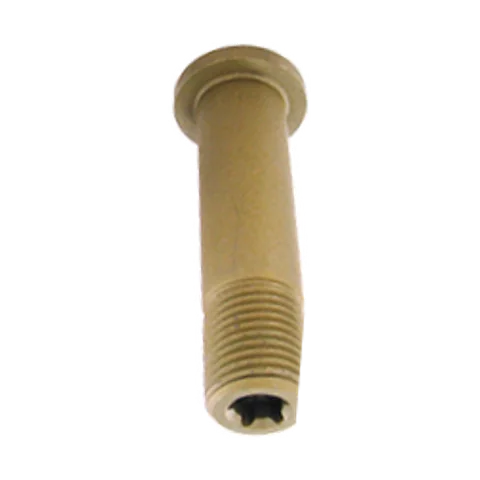
- HST10 draws an indented head marking: the basic number HST10, the hs trademark and the first dash number. Hi-Shear HST10 drawing p.sheet 1
Tail side
- “COLLAR WRENCHING DEVICE AUTOMATICALLY SHEARS OFF” Hi-Shear HST10 drawing p.sheet 1
- HST10 dimensions a hex socket in the threaded end of the pin. Hi-Shear HST10 drawing p.sheet 1
- “HI-LITE THREAD TRANSITION AREA.” Hi-Shear HST10 drawing p.sheet 1
What it is, and marks1 line
- HST10 is titled Hi-Lite ST pin, protruding shear head, titanium. Hi-Shear HST10 drawing p.sheet 1
Huck lockbolt, pull type
Huck
Head side
- Huck's figure labels the parts: lockbolt pin head, locking grooves, breakneck, pintail, collar. Huck tool catalog 2010 p.8
Tail side
- “After the pin is inserted from one side of the work surface through a prepared hole, a collar is placed over the pintail.” Huck tool catalog 2010 p.8
- “The swage die in the outer sleeve of the nose assembly moves forward, swaging the collar material into the pin’s locking grooves, providing a permanent lock between the pin and collar.” Huck tool catalog 2010 p.8
- “the pintail separates in tension at the breakneck” Huck tool catalog 2010 p.8
- “These fasteners are available in Stump Type (without pintail) and are intended for hammer drive installation or automated installation.” Huck tool catalog 2010 p.45
What it is, and marks1 line
- “Lockbolt Fasteners are two part fasteners consisting of a pin and collar” Huck tool catalog 2010 p.8
Composi-Lok II
Monogram Aerospace Fasteners
Head side
Tail side
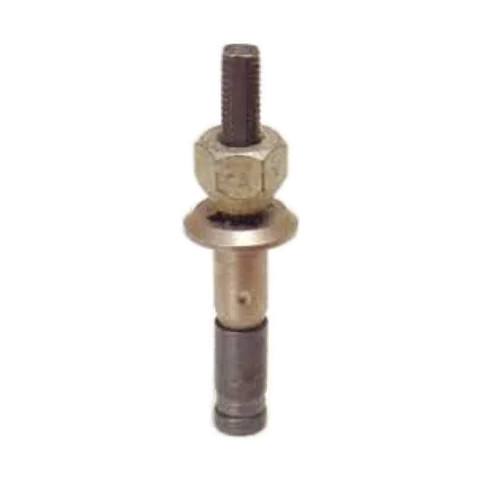
Head side
- “As driving is completed, the slabbed portion of the screw is snapped off and ejected along with the drive-nut (See Figure 15).” Monogram MBF2003 Rev AG p.17
Tail side
- “The sleeve is thereby expanded subsequently forming a head against the mating surface being joined.” Monogram MBF2003 Rev AG p.17
What it is, and marks1 line
- “As power is applied, the screw is turned as the nut is held stationary by the drive-nut which in turn is held stationary by the nose piece.” Monogram MBF2003 Rev AG p.17
Solid rivet (MS20470)
Standard part
Head side
Tail side
Head side
- The handbook calls the manufactured head the factory head. FAA-H-8083-31B p.4-30
Tail side
- “Once placed in this predrilled hole, the bucktail is upset or deformed” FAA-H-8083-31B p.4-30
- “The properly formed shop head equals one and a half times the diameter of the rivet shank.” FAA-H-8083-31B p.4-32
What it is, and marks1 line
- “Before installation, the rivet consists of a smooth cylindrical shaft with a factory head on one end. The opposite end is called the bucktail.” FAA-H-8083-31B p.4-30
Not shown2
- Jo-Bolt. No manufacturer or public-release government figure of the installed fastener is on file.
- Huck lockbolt, stump type. No drawing on file. The Huck catalog's one sentence about it is quoted under the pull-type lockbolt.
Have a part number instead? Decode it · How each one installs, step by step
Next
Sources
- FAA AC 43.13-1B
- Cherry CA-1015 (CherryMAX process manual)
- Cherry CA-1011 (CherryMAX)
- Cherry CA-1005 (CherryLOCK)
- Hi-Shear Hi-Lok and Hi-Lok/Hi-Tigue Installation Instructions
- Hi-Shear HL10 drawing
- Hi-Shear HST10 drawing
- Huck Aerospace Installation Equipment catalog (Jan 2010, archived)
- Monogram MBF2003 Rev AG (Composi-Lok II install spec)
- FAA-H-8083-31B (AMT Handbook, Airframe)